Travel Insurance Coverage A Comprehensive Guide
Insurance
|
May 8, 2026
Travel insurance coverage is essential for ensuring financial security and peace of mind when venturing away from home. Unplanned occurrences such as trip cancellations, lost luggage, or sudden health emergencies can turn an exciting journey into a financial burden if not adequately managed. Understanding the nuances of policy benefits and exclusions is crucial because not all travel insurance policies are created equal. Throughout this article, we will delve into the key elements of travel insurance coverage, dissect what typical policies cover as well as common exclusions, and provide guidance on evaluating different plans. Equipped with this knowledge, you will be better empowered to make informed decisions, ensuring that your travels are safeguarded against unforeseen challenges.
Travel insurance coverage is essential for ensuring financial security and peace of mind when venturing away from home. Unplanned occurrences such as trip cancellations, lost luggage, or sudden health emergencies can turn an exciting journey into a financial burden if not adequately managed. Understanding the nuances of policy benefits and exclusions is crucial because not all travel insurance policies are created equal. Throughout this article, we will delve into the key elements of travel insurance coverage, dissect what typical policies cover as well as common exclusions, and provide guidance on evaluating different plans. Equipped with this knowledge, you will be better empowered to make informed decisions, ensuring that your travels are safeguarded against unforeseen challenges.
What Is Travel Insurance Coverage?
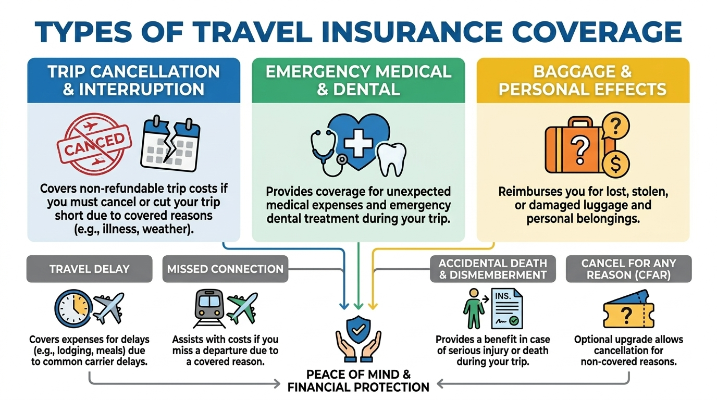
Travel insurance coverage is designed specifically to protect travelers from unexpected events that may disrupt their journeys. It serves as a financial safety net, offering critical support for difficulties such as medical emergencies, baggage loss, or trip cancellations. The primary purpose of this insurance is to alleviate the financial burden associated with such incidents, thereby providing travelers with the reassurance to enjoy their time abroad.
Notably, travel insurance differs significantly from standard health insurance, which typically applies only to medical expenses incurred within one’s home country. In contrast, travel insurance addresses travel-related risks, covering events like flight cancellations or lost luggage, which are not usually included in traditional health insurance plans. Each insurance company may offer different terms based on various factors such as the traveler’s age, trip duration, and even the destination, making it essential to compare policies to identify the best fit for your needs.
What Does Travel Insurance Typically Cover?
A well-rounded travel insurance policy includes multiple types of coverage that protect travelers from a variety of unanticipated incidents. Below is a comparison table summarizing common coverage areas and their purpose:
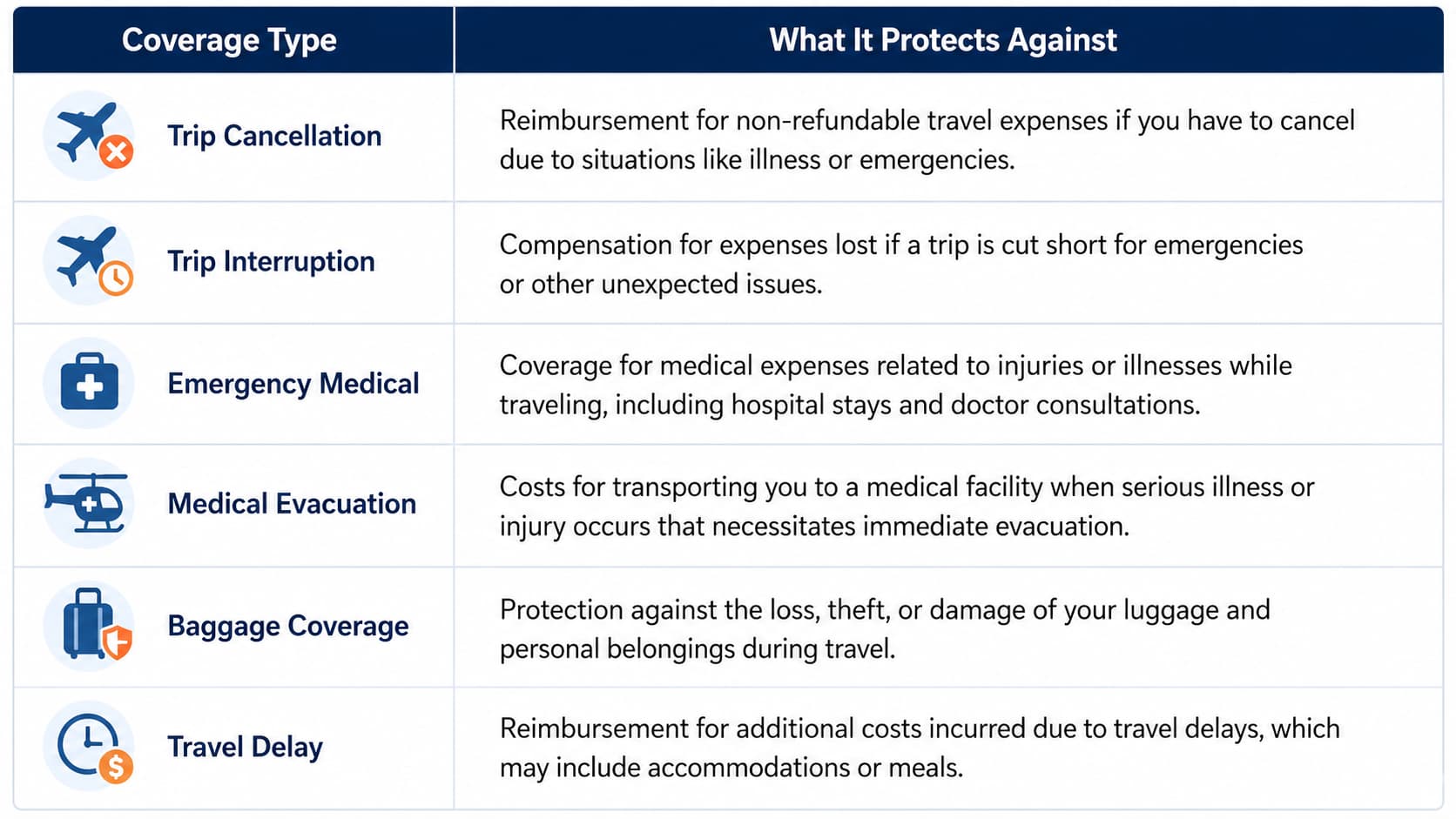
Having a solid understanding of these categories can facilitate a well-informed decision when selecting a policy, thereby enhancing the overall travel experience by providing security and confidence.
Trip Cancellation Coverage
Trip cancellation coverage grants crucial financial protection against losing prepaid expenses should unexpected situations arise. Covered reasons often include serious illness, injury, or the death of the insured or a travel companion, as well as unforeseen natural disasters or industry-related reasons, like job loss. When a trip must be canceled, travelers typically need to submit a claim that includes proof of expenses—such as flight tickets or hotel confirmations—along with documentation of the event necessitating the cancellation. Most policies require valid reasons that need to be substantiated to ensure reimbursement for non-refundable costs, providing vital reassurance when planning future trips. It is advisable to examine each policy’s coverage limits and associated exclusions carefully to guarantee adequate insurance.
Trip Interruption Coverage
Trip interruption coverage is another crucial aspect of travel insurance that comes into play when travelers need to return home early for unforeseen reasons. This coverage becomes relevant when circumstances pose a risk to a traveler’s health or safety, such as unexpected illness or emergencies arising during the journey. Factors leading to interruptions can include severe weather conditions that hinder safe travel or critical incidents necessitating urgent returns. In scenarios such as a medical emergency or the death of a loved one, trip interruption coverage ensures you are reimbursed for additional costs incurred due to early departure—like revised flight tickets or accommodation arrangements—for peace of mind in distressing situations.
Emergency Medical Coverage
Emergency medical coverage is vital for protecting travelers against unforeseen health issues or injuries while overseas. For example, consider a traveler hiking in the Alps who suffers a serious fall requiring immediate medical attention. Without robust emergency medical coverage, the costs associated with hospitalization abroad can quickly escalate, amounting to thousands of dollars. This form of coverage ensures that travelers have access to necessary medical care without being crippled by exorbitant out-of-pocket expenses. It typically covers a range of services, including hospitalization, medical consultations, and emergency treatments, ensuring swift assistance when needed. Furthermore, if a traveler falls ill while exploring a secluded area, travel insurance can facilitate the necessary medical transport to reach appropriate care. Knowing there’s a safety net in place allows travelers to immerse themselves in their experiences without the lingering worry of unexpected healthcare costs.
Emergency Medical Evacuation Coverage
Emergency medical evacuation coverage becomes crucial for travelers who encounter life-threatening situations that necessitate immediate transfer to a suitable healthcare facility. Common medical emergencies that might qualify for evacuation include severe injuries, strokes, or other serious illnesses that require urgent expert care not available in the immediate area. In these cases, air ambulance services play a vital role, swiftly transporting individuals to hospitals equipped for advanced treatment. The logistics of such transfers often involve coordination with medical professionals to ensure effective assistance during the transportation process. Grasping the details of this coverage prepares travelers for potential health emergencies and offers significant comfort throughout their trips.
Baggage and Personal Belongings Coverage
Baggage and personal belongings coverage is an essential component of travel insurance, providing safeguards against unforeseen losses. This insurance typically comes into play with incidents like lost baggage, where airlines fail to deliver personal items, as well as theft of belongings while on a trip. Often, this coverage includes reimbursement for essential purchases made while waiting for delayed luggage, usually covering expenses for necessities up to 24 hours. To claim compensation, travelers need to report the loss or theft both to the relevant authorities and their insurance provider promptly, retaining receipts for any lost or damaged items. Familiarity with the specifics of this coverage can significantly reduce stress and enhance the travel experience by providing assurance against unforeseen circumstances.
Travel Delay Coverage
Travel delays can arise for various reasons, including flight cancellations, severe weather, or mechanical issues. It’s important for travelers to fully understand how their insurance defines a travel delay. Many travel insurance policies offer reimbursement for costs incurred due to these delays, which can help mitigate the financial ramifications of unexpected events. Commonly covered expenses typically include accommodations, meals, and transportation—a valuable shield against the disruption’s costs. Travelers are encouraged to carefully review their policy details to identify coverage limits and exclusions, ensuring they are appropriately protected in the event of a disruption during their journey.
What Travel Insurance Usually Does Not Cover
Understanding the exclusions associated with travel insurance is equally important as knowing what is covered. Common exclusions can dramatically affect a traveler’s plans and financial safety. For instance, most policies do not cover pre-existing medical conditions unless explicitly stated. Additionally, many insurers exclude losses linked to non-emergency cancellations, such as personal matters. High-risk activities, including adventure sports, might be excluded unless additional coverage is acquired, pointing to the necessity of understanding your policy’s limitations. Moreover, losses due to negligence, like leaving personal items unattended, are generally not compensated. Familiarizing oneself with these exclusions is crucial in making informed decisions and preparing for possible challenges that may arise while traveling.
Pre-Existing Medical Conditions
Pre-existing medical conditions significantly impact the options available for travel insurance coverage. Many insurers tend to exclude these conditions entirely or impose specific restrictions, such as waiting periods before claims can be filed. Moreover, having a pre-existing condition may also affect premium rates and eligibility for coverage. Therefore, it’s essential for travelers to carefully assess their health histories against policy provisions, ensuring they understand how their medical background affects their travel insurance decisions before embarking on a journey.
High-Risk or Extreme Activities
High-risk activities such as skydiving, scuba diving, or rock climbing often fall outside the standard scope of travel insurance. This exclusion arises from the potential dangers tied to these activities, heightening the possibility of injuries or accidents. Insurance providers manage potential financial risks by refraining from offering coverage related to activities deemed excessively hazardous, often necessitating that travelers seek specialized policies specifically for such high-stakes adventures. Therefore, it is advisable for participants in these activities to thoroughly compare available options for tailored insurance that addresses their specific needs.
Known Events and Foreseeable Circumstances
Understanding known events and foreseeable circumstances is vital for travelers when considering travel insurance coverage. Common exclusions include events like natural disasters or political unrest that are already in the public domain before the policy purchase. As a result, reviewing the specifics of each policy is necessary to identify these exclusions clearly. This understanding enables travelers to make informed coverage decisions that align with their travel objectives, ensuring reassurance while embarking on their journeys.
Optional Travel Insurance Coverage Add-Ons
When evaluating travel insurance, travelers can consider various optional add-ons to bolster their peace of mind. One notable option is Cancel For Any Reason (CFAR) coverage, which provides the flexibility to cancel a trip for virtually any reason, ideal for those who may face unpredictable changes. For thrill-seekers, adventure sports coverage represents an essential safeguard against injuries sustained while participating in high-risk activities. This add-on allows travelers to engage in their passions without the constant worry of hefty medical expenses.
Furthermore, rental car protection proves beneficial for those renting vehicles, covering potential damages or theft. Lastly, for those heading to destinations where healthcare costs are steep, higher medical limits can provide sufficient coverage against medical emergencies. Each of these add-ons can significantly enhance a traveler's sense of security, promoting confidence while exploring the globe.
How Much Travel Insurance Coverage Do You Need?
Determining the appropriate level of travel insurance coverage is key to safeguarding your upcoming trip. Factors influencing necessary coverage include the destination; countries with higher medical expenses typically warrant increased insurance limits. Moreover, the overall cost of your journey plays a significant role; individuals slating considerable investments in non-refundable expenses should consider policies that mirror these amounts. Medical risk factors are also pertinent; travelers with pre-existing conditions or those engaging in high-risk activities should opt for more comprehensive medical coverage. Additionally, the length of travel can influence overall coverage needs; extended trips might elevate the chances of unforeseen events occurring, making broader protections essential. Analyzing these elements enables travelers to select insurance tailored to their unique circumstances, leading to a more secure travel experience.
How to Compare Travel Insurance Coverage
To navigate the travel insurance marketplace effectively, consider these key points for a thorough comparison:
- Read Policy Certificates: Always examine the policy documents carefully to understand coverage specifics.
- Understand Coverage Limits and Deductibles: Familiarize yourself with the maximum claim amounts and any deductibles you must cover before the insurance payout.
- Identify Exclusions: Investigate exclusions related to pre-existing conditions, certain activities, or explicit situations not covered by the policy.
- Claims Requirements: Understand how to file claims, as procedures can vary widely amongst insurers.
Final Thoughts
Travel insurance offers essential coverage across several critical categories, including trip cancellation, medical emergencies, lost luggage, and travel delays. However, it’s equally important to recognize common exclusions that may catch travelers off guard—such as pre-existing medical conditions, high-risk activities, or events related to substance use. As discussed, thorough policy evaluation is imperative; understanding the specifics of what is and isn’t covered enables informed decisions that align with individual travel requirements. Commit to comparing different policies, clarifying any ambiguous terms, and ensuring your coverage effectively meets your travel needs. By taking these proactive steps, you will not only enjoy your travels with peace of mind but also protect your investment from unforeseen circumstances.
Was this helpful? Share your thoughts